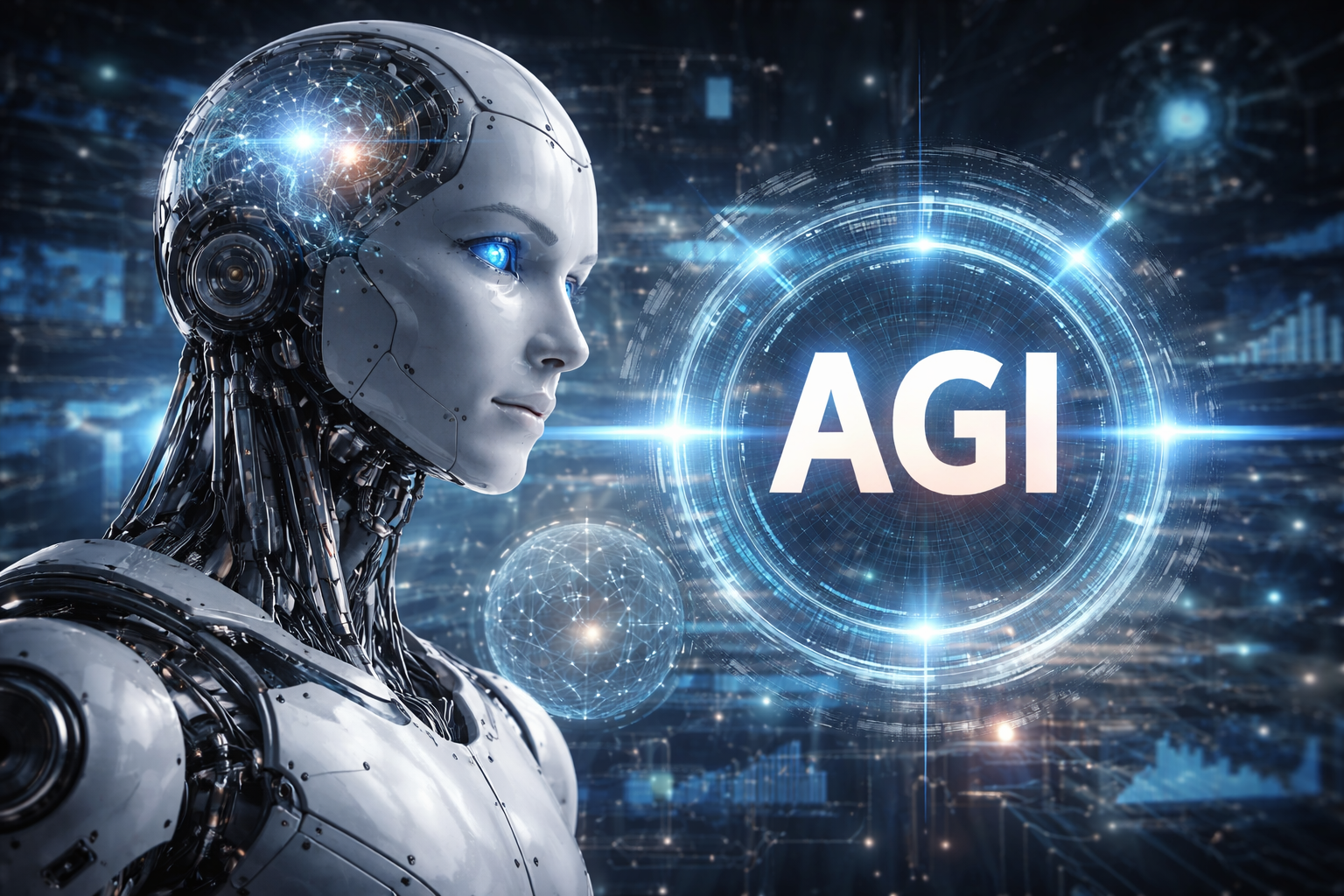
Artificial intelligence has revolutionized
The way we live, work, and think. There are narrow AI systems that play an integral role in our everyday activities. From answering your queries to recommending a product you need or suggesting movies based on your preferences, there are AI systems for every purpose. However, unlike AGI systems, which can learn from one discipline and apply that knowledge to others, narrow AI systems can perform only specific tasks and cannot extrapolate their learning skills across other disciplines. This is where AGI was conceptualized. It is believed that AGI would give rise to machines with human-like intelligence that can adapt themselves to various situations and learn accordingly.
AGI represents a revolutionary leap
Forward in comparison with current AI technologies. AGI will possess the ability to understand, learn, and utilize information flexibly, while narrow AI is only designed to perform one specific function, such as facial recognition or text translation. In other words, any mental activity that humans can accomplish can potentially be performed by AGI, perhaps faster and better.
Artificial General Intelligence (AGI)
Captured the imagination of science fiction writers, but advancements in machine learning, neural networks, and computing power have rendered the idea more realistic than ever before. Today, researchers are investigating how to develop machines that can plan and reason, as well as demonstrate creativity. Even though AGI still remains out of reach for now, the rapid pace of technological innovation suggests that it might not be too distant in the future.
One of the most exciting possibilities of AGI lies in the power it holds to solve some of the most challenging problems around the world. For example, through analyzing massive amounts of data on health care and developing new treatments, AGI can revolutionize the health care industry. It would allow faster innovation through performing more experiments and generating new ideas than humans ever could do. AGI can also be used for scientific research in fields such as climate science in order to predict future changes and find solutions to prevent global warming.
AGI can also be employed in solving problems associated with education. Personalized training programs powered by AGI can help students learn and develop according to their needs and abilities. This would eliminate educational inequalities and allow people all around the globe to benefit from top-notch education.
However, there are also some crucial ethical, social, and economic challenges associated with the advent of AGI. One of them includes the potential for massive displacement of workers. Indeed, many conventional professions can become obsolete because of the ability of robots to perform activities that require the employment of intelligence by humans. Regardless of whether the emergence of new jobs will follow, the transition may become problematic and even exacerbate inequality.
The problem of alignment and control
This represents another major challenge. Ensuring that AGI systems act in accordance with human values is a daunting yet essential objective. Indeed, the consequences of an AGI system working on the realization of goals that conflict with the best interests of people would be catastrophic. Nonetheless, much work remains to be done as specialists develop techniques for ensuring that AGI systems operate safely.
The issues of security and privacy are equally important. In order for AGI systems to operate efficiently, they will likely require access to huge amounts of data. Thus, it becomes important to examine the mechanisms used to gather, store, and analyze data. Privacy and individual autonomy can become endangered if there are no sufficient safeguards against their exploitation.
Moreover, yet another issue which should not be overlooked concerns the concentration of power. The development of AGI requires large amounts of data, highly skilled workers, and innovative technologies. Such a state of affairs may lead to a scenario where only several countries or organizations will possess and manage AGI systems, creating uneven distributions of power across the globe.
Nevertheless, there is a common consensus among researchers that if AGI is developed with due diligence, it will offer more benefits than drawbacks. To ensure that the benefits are maximized, it is essential to establish partnerships between the government, academic institutions, and corporate leaders.
Neither education nor raising public awareness can be overlooked. People should understand the implications of AGI and contribute to discussions about AGI’s development and implementation. Open dialogue and transparency in scientific research can create a foundation of trust, ensuring different points of view will be considered.
AGI will emerge
There is no consensus regarding when AGI will emerge. Whereas some researchers believe that AGI may be realized much later, there are those who believe that AGI can materialize within the following few decades. Regardless of when AGI will become a reality, preparation for AGI requires responsibility, proper planning, and cooperation.
To conclude, artificial general intelligence is probably the most radical and disruptive technology in the entire history of humankind. Artificial general intelligence may bring unprecedented progress to science, medicine, education, and many other areas. At the same time, artificial general intelligence raises numerous problems that should be solved with care and diligence. The journey towards AGI should be perceived both as a technological process and as a social one, requiring an in-depth investigation of ethical, economic, and geopolitical aspects of AGI development.
Conclusion
Our choices today will set the course for the development of AGI and the impact that AGI will have on humanity in the coming era. We should aim to build an era when AGI will be used as an immensely powerful tool to help humans progress, by fostering innovation, safety, and inclusivity.