
Category: Marketing

  • Social Media Marketing: Approach, Effects, and Future Trends

    Social Media Marketing: Approach, Effects, and Future Trends

    Nowadays, social media marketing is considered the best way for companies to communicate with the customers, increase brand awareness, and improve the sales numbers. It is important to understand that modern social platforms such as Instagram, Facebook, LinkedIn, and TikTok do not merely serve as places for people to interact. They are also used by companies to communicate with the public to make them familiar with various goods and services that have been introduced recently.

    Social media marketing

    Speaking about the definition of social media marketing, it should be mentioned that it includes actions aimed at creating and publishing content on various social media in order to reach certain marketing and branding purposes. Among other aspects of social media marketing, there should be emphasized the ability to post not only text but also images, videos, and stories, and advertisements that can attract the interest of the target audience. Besides, what makes it different from the other marketing types is that it is interactive.

    An effective social media marketing strategy depends on identifying the target market. Companies need to understand who their clients are and how they interact through the various social networks. This will enable companies to create suitable content that appeals to the users on such platforms. Young people tend to engage well with fun videos whereas professionals prefer informative content. User interaction and behavior help to tweak social media marketing plans.

    Content

    The second key element in social media marketing is creating excellent content. Quality and creativity help in retaining the audience and earning their trust. Visual content, especially videos and pictures, work better than writing. Social media trends have been seen to be extremely popular. Influencer marketing has become very crucial in most social media marketing strategies since the influencers have fans who listen to their advice.

    Consistency in posting also plays an important role in social media marketing. This will help to retain the attention of the audience and keep the company’s presence alive. Consistency, however, should never come at the expense of quality content. It is advisable to make fewer but high-quality posts than to make lots of mediocre ones.

    Customer engagement

    The next important advantage associated with social media marketing includes customer engagement. Being able to respond to users’ comments, answer all possible questions, and generally engage with people increases chances to develop good relationships with customers. As a result, the level of trust to the brand grows together with positive image of a company. In most cases, social networks become an effective tool to deal with customer service.

    Disadvantages

    At the same time, there are some disadvantages associated with the usage of social media marketing. First of all, it should be said about high level of competitiveness in this field that demands using innovative ideas for promotion. It is important to take into account that algorithms of different social media platforms change regularly, influencing the possibility to attract attention.

    Speaking about future trends associated with social media marketing, it is possible to pay attention to technologies, such as artificial intelligence, augmented reality, and personalization of content. With the help of artificial intelligence, it becomes possible to analyze data of users and predict the further development. Augmented reality creates immersive experience for potential customers.

    Conclusion

    In summary, social media marketing is a vital element in any contemporary business plan. Social media provides unlimited possibilities for brands to gain exposure and engage customers through targeted advertisements. Although the process of implementing social media marketing may be difficult and challenging at times, the pros certainly outweigh the cons. Innovation is the key to successful social media marketing campaigns.
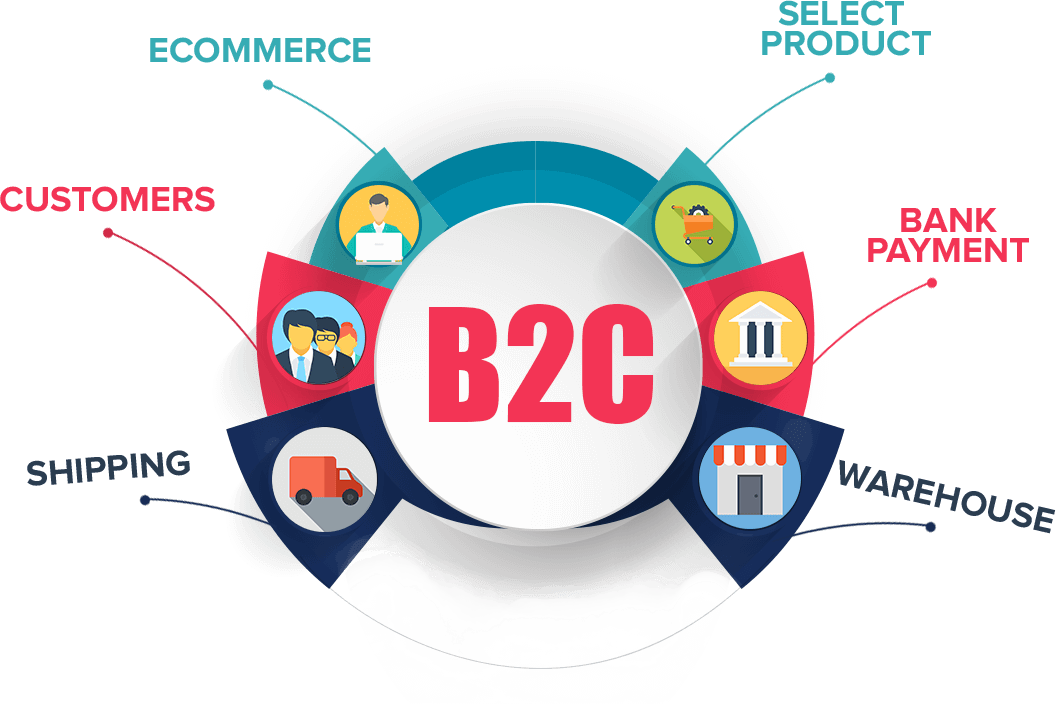

  • B2C Marketing: Techniques, Significance, and Effects

    B2C Marketing: Techniques, Significance, and Effects

    B2C marketing involves all the techniques used by organizations to market their products or services directly to consumers. It differs from B2B marketing, which aims at organizations, since B2C marketing seeks to satisfy the needs and desires of individual consumers. B2C marketing has changed drastically in the current digital era, incorporating personalized techniques.
    One of the unique aspects of B2C marketing is its emphasis on emotions. The purchasing decision made by consumers is driven mainly by emotions. For instance, marketing strategies that invoke happy or nostalgic feelings among the target market tend to have higher returns compared to those that employ rational messages.

    B2C marketing

    The quick decision process is yet another key feature of B2C marketing. As opposed to business-to-business transactions which might take several weeks or months to be finalized, an individual consumer tends to act immediately. The quickness of the decision making process in the context of B2C requires immediate catching of attention and offering of a sound rationale for buying the product. Attractive advertising campaigns, special offers, and the description of the product benefits help achieve this goal.

    B2C marketing has been considerably influenced by digital developments of the recent years. Digital social networks such as Instagram, Facebook, and YouTube became indispensable marketing tools for businesses. Email marketing, search engine marketing, and marketing on mobile applications are all equally popular among contemporary business enterprises. Influencers marketing has also become extremely popular as it leverages the power of opinion leaders in promoting products.

    Personalization

    Personalization is one more important trend of the modern day B2C marketing. Due to the availability of data, the companies can use it to personalize their marketing campaigns. In particular, online shops suggest products based on previous purchases or interests.

    Content marketing

    Content marketing is a crucial part of B2C marketing. Rather than focusing on hard-selling, companies offer useful content like blogs, video tutorials, social media posts, etc., to establish themselves as authorities in their respective domains. For example, a fitness company can offer consumers workout tips and nutritious meal plans to build their authority, thereby indirectly selling their product offerings.

    Price and promotion play a vital role in B2C marketing. Price discounts, coupons, and other offers lure customers and trigger impulse buying. Seasonal and festive promotions entice customers into buying more. Loyalty schemes and reward programs help businesses keep customers engaged through attractive discounts and other perks.

    customer experience

    The customer experience plays an important role in B2C marketing. It involves the experience from the first interaction with the brand up to the after-sale service. The convenience of navigation within a website, timely delivery of the products, customer support and easy return policies contribute to a pleasant customer experience. This, in turn, leads to recommending the product to family and friends, which results in word-of-mouth marketing. This type of marketing is free and effective at the same time.

    Using new technologies like AI and chatbots also becomes an increasingly popular approach to B2C marketing. Technologies help to provide prompt answers and assistance for customers, personalized offers and recommendations, and much more. For instance, when using a website, chatbots help to navigate through the website, answer customers’ questions and even make purchases Nevertheless, B2C marketing also has some drawbacks. Firstly, fierce competition can result in problems for brands in terms of increasing their market share. Secondly, consumers’ tastes keep changing and companies should always be aware of the latest trends to succeed in the market. Thirdly, there is always a possibility of getting negative reviews.

    Conclusion

    In summary, B2C marketing remains a highly active process that companies must undertake if they are to reach out to customers directly. It emphasizes the need for emotional impact and instant gratification in order to make purchases happen and foster customer loyalty. Today’s B2C marketing has become more dynamic owing to new technology trends; however, it calls for creative approaches and understanding of customers’ needs. The key to achieving success lies in adding value and establishing solid relations with customers.

  • The Future of B2B Marketing: Strategies That Drive Real Growth

    The Future of B2B Marketing: Strategies That Drive Real Growth

    B2B marketing stands for marketing activities done between two businesses, which is the opposite of selling to individuals in consumer marketplaces. Compared to B2C, B2B does not rely much on emotion-driven decision-making, but instead relies on rational and logical considerations of value when selling products or services. This type of marketing plays an important part in several sectors, including manufacturing, tech, consulting, and wholesale businesses.

    Ultimately, B2B marketing seeks to prove that the product or service being offered can help solve business problems, increase efficiency, and ultimately earn the company money. Decision-makers such as managers and executives make up the typical audience. Since such people make important decisions, B2B marketing techniques need to be thorough, analytical, and based on facts.
    The extended sales cycle is another distinguishing feature of B2B marketing. While consumers typically make purchases immediately, business-to-business deals usually involve several rounds of assessment, discussion, and decision-making. As a result, establishing trust plays an important role in B2B marketing. It is necessary to provide constant communication, proper value propositions, and support services.

    Content marketing

    Content marketing has proven to be very successful in B2B marketing. Companies produce various content formats such as blogs, white papers, case studies, and webinars. They aim to inform their audience and establish themselves as experts in their field. For instance, a software vendor can share case studies that demonstrate how they have enhanced other companies’ efficiency through their products.

    Another critical element includes relationship marketing. Relationship marketing in the B2B environment implies that lasting relations are worth much more than one-time transactions. It involves efforts aimed at building relationships, such as personal contact, customer care, and loyalty programs. Another technique that is frequently used includes account-based marketing (ABM). It is about focusing marketing efforts on high value accounts exclusively.
    The emergence of digital marketing has changed business approaches greatly. LinkedIn, email marketing, and SEO techniques have become common practice in B2B communication. Various tools and targeted advertising help identify and attract prospective clients. Among them, email marketing still plays an essential role in client nurturing and communication.

    B2B marketing is the brand reputation

    Another important element of B2B marketing is the brand reputation. As business decisions require higher risks and investments, organizations want to collaborate only with reputable companies. Recommendations, feedbacks, and the company’s status in the industry significantly influence the purchase decision. Honesty, reliability, and good quality can positively affect the brand’s image.
    Unlike B2C marketing, pricing and value proposition are other factors that differ in B2B. Customers do not pay attention to the price but try to obtain value, ROI, and benefits. Marketers should highlight ways to save money, boost efficiency, or gain an advantage.Finally, technology is an integral part of today’s B2B marketing. CRM helps monitor customers’ interactions and handle lead management and customer experience issues. At the same time, marketing automation tools make it easier to plan, customize, and analyze marketing campaigns.

    Nevertheless, B2B marketing also has its share of difficulties. The first difficulty is stiff competition as there could be several other businesses offering similar products or services. To succeed in such conditions, a company must be innovative, establish a strong brand name, and have an obvious USP. Another difficultly that a business may face is the evolution of consumer behavior in that buyers perform intensive online research prior to purchase.

    Conclusion

    To conclude, B2B marketing is a complicated practice, which revolves around building relationships, providing valuable products/services, and helping buyers make well-grounded decisions. In order for a business to successfully engage in B2B marketing, a thorough knowledge of its target audience is essential together with the ability to effectively communicate with potential buyers using digital means.