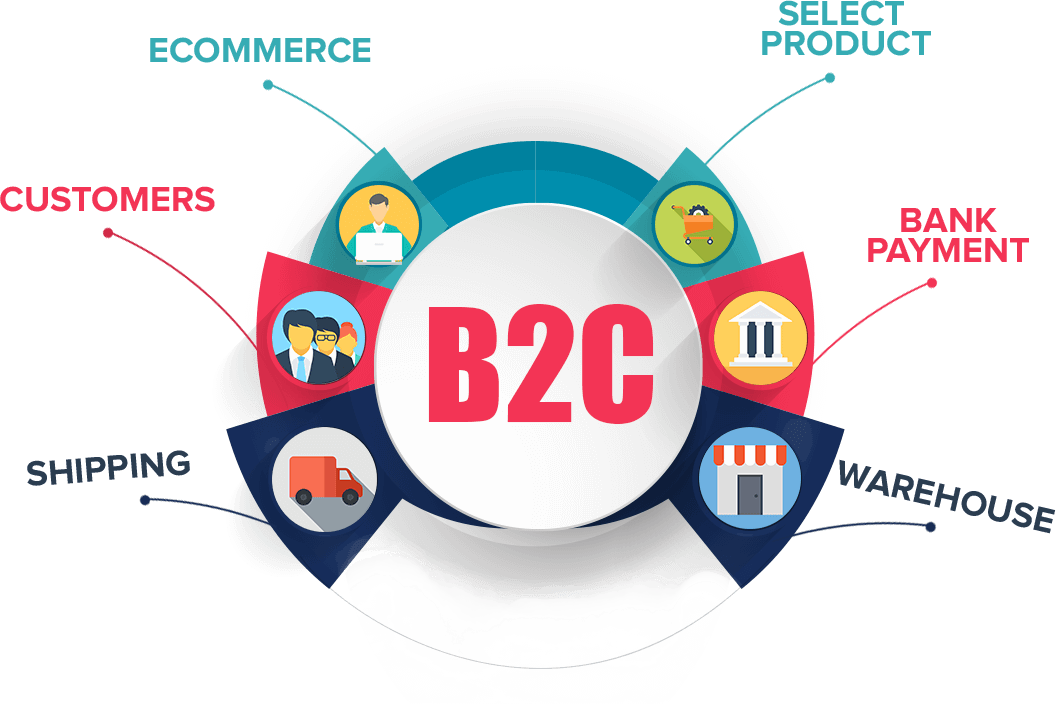
B2C marketing involves all the techniques used by organizations to market their products or services directly to consumers. It differs from B2B marketing, which aims at organizations, since B2C marketing seeks to satisfy the needs and desires of individual consumers. B2C marketing has changed drastically in the current digital era, incorporating personalized techniques.
One of the unique aspects of B2C marketing is its emphasis on emotions. The purchasing decision made by consumers is driven mainly by emotions. For instance, marketing strategies that invoke happy or nostalgic feelings among the target market tend to have higher returns compared to those that employ rational messages.
B2C marketing
The quick decision process is yet another key feature of B2C marketing. As opposed to business-to-business transactions which might take several weeks or months to be finalized, an individual consumer tends to act immediately. The quickness of the decision making process in the context of B2C requires immediate catching of attention and offering of a sound rationale for buying the product. Attractive advertising campaigns, special offers, and the description of the product benefits help achieve this goal.
B2C marketing has been considerably influenced by digital developments of the recent years. Digital social networks such as Instagram, Facebook, and YouTube became indispensable marketing tools for businesses. Email marketing, search engine marketing, and marketing on mobile applications are all equally popular among contemporary business enterprises. Influencers marketing has also become extremely popular as it leverages the power of opinion leaders in promoting products.
Personalization
Personalization is one more important trend of the modern day B2C marketing. Due to the availability of data, the companies can use it to personalize their marketing campaigns. In particular, online shops suggest products based on previous purchases or interests.
Content marketing
Content marketing is a crucial part of B2C marketing. Rather than focusing on hard-selling, companies offer useful content like blogs, video tutorials, social media posts, etc., to establish themselves as authorities in their respective domains. For example, a fitness company can offer consumers workout tips and nutritious meal plans to build their authority, thereby indirectly selling their product offerings.
Price and promotion play a vital role in B2C marketing. Price discounts, coupons, and other offers lure customers and trigger impulse buying. Seasonal and festive promotions entice customers into buying more. Loyalty schemes and reward programs help businesses keep customers engaged through attractive discounts and other perks.
customer experience
The customer experience plays an important role in B2C marketing. It involves the experience from the first interaction with the brand up to the after-sale service. The convenience of navigation within a website, timely delivery of the products, customer support and easy return policies contribute to a pleasant customer experience. This, in turn, leads to recommending the product to family and friends, which results in word-of-mouth marketing. This type of marketing is free and effective at the same time.
Using new technologies like AI and chatbots also becomes an increasingly popular approach to B2C marketing. Technologies help to provide prompt answers and assistance for customers, personalized offers and recommendations, and much more. For instance, when using a website, chatbots help to navigate through the website, answer customers’ questions and even make purchases Nevertheless, B2C marketing also has some drawbacks. Firstly, fierce competition can result in problems for brands in terms of increasing their market share. Secondly, consumers’ tastes keep changing and companies should always be aware of the latest trends to succeed in the market. Thirdly, there is always a possibility of getting negative reviews.
Conclusion
In summary, B2C marketing remains a highly active process that companies must undertake if they are to reach out to customers directly. It emphasizes the need for emotional impact and instant gratification in order to make purchases happen and foster customer loyalty. Today’s B2C marketing has become more dynamic owing to new technology trends; however, it calls for creative approaches and understanding of customers’ needs. The key to achieving success lies in adding value and establishing solid relations with customers.
Leave a Reply