Author: admin

  • Social Media Marketing: Approach, Effects, and Future Trends

    Social Media Marketing: Approach, Effects, and Future Trends

    Nowadays, social media marketing is considered the best way for companies to communicate with the customers, increase brand awareness, and improve the sales numbers. It is important to understand that modern social platforms such as Instagram, Facebook, LinkedIn, and TikTok do not merely serve as places for people to interact. They are also used by companies to communicate with the public to make them familiar with various goods and services that have been introduced recently.

    Social media marketing

    Speaking about the definition of social media marketing, it should be mentioned that it includes actions aimed at creating and publishing content on various social media in order to reach certain marketing and branding purposes. Among other aspects of social media marketing, there should be emphasized the ability to post not only text but also images, videos, and stories, and advertisements that can attract the interest of the target audience. Besides, what makes it different from the other marketing types is that it is interactive.

    An effective social media marketing strategy depends on identifying the target market. Companies need to understand who their clients are and how they interact through the various social networks. This will enable companies to create suitable content that appeals to the users on such platforms. Young people tend to engage well with fun videos whereas professionals prefer informative content. User interaction and behavior help to tweak social media marketing plans.

    Content

    The second key element in social media marketing is creating excellent content. Quality and creativity help in retaining the audience and earning their trust. Visual content, especially videos and pictures, work better than writing. Social media trends have been seen to be extremely popular. Influencer marketing has become very crucial in most social media marketing strategies since the influencers have fans who listen to their advice.

    Consistency in posting also plays an important role in social media marketing. This will help to retain the attention of the audience and keep the company’s presence alive. Consistency, however, should never come at the expense of quality content. It is advisable to make fewer but high-quality posts than to make lots of mediocre ones.

    Customer engagement

    The next important advantage associated with social media marketing includes customer engagement. Being able to respond to users’ comments, answer all possible questions, and generally engage with people increases chances to develop good relationships with customers. As a result, the level of trust to the brand grows together with positive image of a company. In most cases, social networks become an effective tool to deal with customer service.

    Disadvantages

    At the same time, there are some disadvantages associated with the usage of social media marketing. First of all, it should be said about high level of competitiveness in this field that demands using innovative ideas for promotion. It is important to take into account that algorithms of different social media platforms change regularly, influencing the possibility to attract attention.

    Speaking about future trends associated with social media marketing, it is possible to pay attention to technologies, such as artificial intelligence, augmented reality, and personalization of content. With the help of artificial intelligence, it becomes possible to analyze data of users and predict the further development. Augmented reality creates immersive experience for potential customers.

    Conclusion

    In summary, social media marketing is a vital element in any contemporary business plan. Social media provides unlimited possibilities for brands to gain exposure and engage customers through targeted advertisements. Although the process of implementing social media marketing may be difficult and challenging at times, the pros certainly outweigh the cons. Innovation is the key to successful social media marketing campaigns.

  • B2C Marketing: Techniques, Significance, and Effects

    B2C Marketing: Techniques, Significance, and Effects

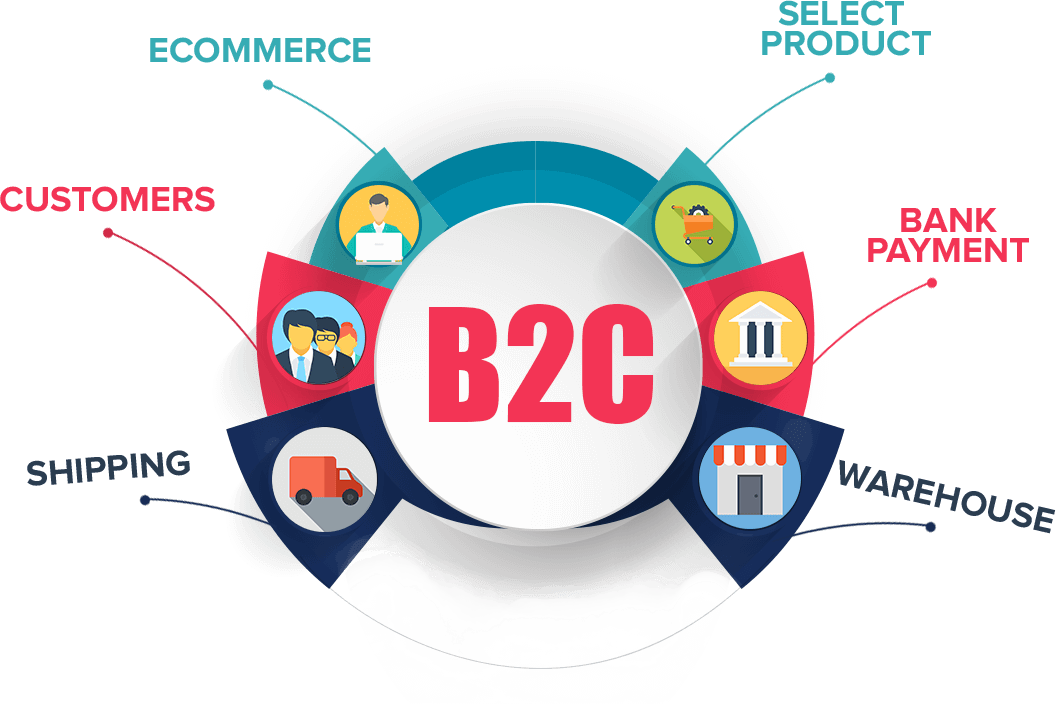
    B2C marketing involves all the techniques used by organizations to market their products or services directly to consumers. It differs from B2B marketing, which aims at organizations, since B2C marketing seeks to satisfy the needs and desires of individual consumers. B2C marketing has changed drastically in the current digital era, incorporating personalized techniques.
    One of the unique aspects of B2C marketing is its emphasis on emotions. The purchasing decision made by consumers is driven mainly by emotions. For instance, marketing strategies that invoke happy or nostalgic feelings among the target market tend to have higher returns compared to those that employ rational messages.

    B2C marketing

    The quick decision process is yet another key feature of B2C marketing. As opposed to business-to-business transactions which might take several weeks or months to be finalized, an individual consumer tends to act immediately. The quickness of the decision making process in the context of B2C requires immediate catching of attention and offering of a sound rationale for buying the product. Attractive advertising campaigns, special offers, and the description of the product benefits help achieve this goal.

    B2C marketing has been considerably influenced by digital developments of the recent years. Digital social networks such as Instagram, Facebook, and YouTube became indispensable marketing tools for businesses. Email marketing, search engine marketing, and marketing on mobile applications are all equally popular among contemporary business enterprises. Influencers marketing has also become extremely popular as it leverages the power of opinion leaders in promoting products.

    Personalization

    Personalization is one more important trend of the modern day B2C marketing. Due to the availability of data, the companies can use it to personalize their marketing campaigns. In particular, online shops suggest products based on previous purchases or interests.

    Content marketing

    Content marketing is a crucial part of B2C marketing. Rather than focusing on hard-selling, companies offer useful content like blogs, video tutorials, social media posts, etc., to establish themselves as authorities in their respective domains. For example, a fitness company can offer consumers workout tips and nutritious meal plans to build their authority, thereby indirectly selling their product offerings.

    Price and promotion play a vital role in B2C marketing. Price discounts, coupons, and other offers lure customers and trigger impulse buying. Seasonal and festive promotions entice customers into buying more. Loyalty schemes and reward programs help businesses keep customers engaged through attractive discounts and other perks.

    customer experience

    The customer experience plays an important role in B2C marketing. It involves the experience from the first interaction with the brand up to the after-sale service. The convenience of navigation within a website, timely delivery of the products, customer support and easy return policies contribute to a pleasant customer experience. This, in turn, leads to recommending the product to family and friends, which results in word-of-mouth marketing. This type of marketing is free and effective at the same time.

    Using new technologies like AI and chatbots also becomes an increasingly popular approach to B2C marketing. Technologies help to provide prompt answers and assistance for customers, personalized offers and recommendations, and much more. For instance, when using a website, chatbots help to navigate through the website, answer customers’ questions and even make purchases Nevertheless, B2C marketing also has some drawbacks. Firstly, fierce competition can result in problems for brands in terms of increasing their market share. Secondly, consumers’ tastes keep changing and companies should always be aware of the latest trends to succeed in the market. Thirdly, there is always a possibility of getting negative reviews.

    Conclusion

    In summary, B2C marketing remains a highly active process that companies must undertake if they are to reach out to customers directly. It emphasizes the need for emotional impact and instant gratification in order to make purchases happen and foster customer loyalty. Today’s B2C marketing has become more dynamic owing to new technology trends; however, it calls for creative approaches and understanding of customers’ needs. The key to achieving success lies in adding value and establishing solid relations with customers.

  • The Future of B2B Marketing: Strategies That Drive Real Growth

    The Future of B2B Marketing: Strategies That Drive Real Growth

    B2B marketing stands for marketing activities done between two businesses, which is the opposite of selling to individuals in consumer marketplaces. Compared to B2C, B2B does not rely much on emotion-driven decision-making, but instead relies on rational and logical considerations of value when selling products or services. This type of marketing plays an important part in several sectors, including manufacturing, tech, consulting, and wholesale businesses.

    Ultimately, B2B marketing seeks to prove that the product or service being offered can help solve business problems, increase efficiency, and ultimately earn the company money. Decision-makers such as managers and executives make up the typical audience. Since such people make important decisions, B2B marketing techniques need to be thorough, analytical, and based on facts.
    The extended sales cycle is another distinguishing feature of B2B marketing. While consumers typically make purchases immediately, business-to-business deals usually involve several rounds of assessment, discussion, and decision-making. As a result, establishing trust plays an important role in B2B marketing. It is necessary to provide constant communication, proper value propositions, and support services.

    Content marketing

    Content marketing has proven to be very successful in B2B marketing. Companies produce various content formats such as blogs, white papers, case studies, and webinars. They aim to inform their audience and establish themselves as experts in their field. For instance, a software vendor can share case studies that demonstrate how they have enhanced other companies’ efficiency through their products.

    Another critical element includes relationship marketing. Relationship marketing in the B2B environment implies that lasting relations are worth much more than one-time transactions. It involves efforts aimed at building relationships, such as personal contact, customer care, and loyalty programs. Another technique that is frequently used includes account-based marketing (ABM). It is about focusing marketing efforts on high value accounts exclusively.
    The emergence of digital marketing has changed business approaches greatly. LinkedIn, email marketing, and SEO techniques have become common practice in B2B communication. Various tools and targeted advertising help identify and attract prospective clients. Among them, email marketing still plays an essential role in client nurturing and communication.

    B2B marketing is the brand reputation

    Another important element of B2B marketing is the brand reputation. As business decisions require higher risks and investments, organizations want to collaborate only with reputable companies. Recommendations, feedbacks, and the company’s status in the industry significantly influence the purchase decision. Honesty, reliability, and good quality can positively affect the brand’s image.
    Unlike B2C marketing, pricing and value proposition are other factors that differ in B2B. Customers do not pay attention to the price but try to obtain value, ROI, and benefits. Marketers should highlight ways to save money, boost efficiency, or gain an advantage.Finally, technology is an integral part of today’s B2B marketing. CRM helps monitor customers’ interactions and handle lead management and customer experience issues. At the same time, marketing automation tools make it easier to plan, customize, and analyze marketing campaigns.

    Nevertheless, B2B marketing also has its share of difficulties. The first difficulty is stiff competition as there could be several other businesses offering similar products or services. To succeed in such conditions, a company must be innovative, establish a strong brand name, and have an obvious USP. Another difficultly that a business may face is the evolution of consumer behavior in that buyers perform intensive online research prior to purchase.

    Conclusion

    To conclude, B2B marketing is a complicated practice, which revolves around building relationships, providing valuable products/services, and helping buyers make well-grounded decisions. In order for a business to successfully engage in B2B marketing, a thorough knowledge of its target audience is essential together with the ability to effectively communicate with potential buyers using digital means.

  • Fintech Services: Transforming the Future of Financial Solutions

    Fintech Services: Transforming the Future of Financial Solutions

    A lot of changes have occurred within the financial services industry over time, and some of these changes are being brought about by the fast growth of financial technology, referred to as fintech in common language. Financial technology or fintech services offer an advanced way of handling finances, investments, lending, and transferring money through the combination of technology and finance.

    Today, the use of fintech services has become a necessity because of the need to adopt innovative ways of carrying out transactions.

    What Are Fintech Services?

    The term fintech services can be defined as financial services that utilize technology to provide various kinds of benefits to users. These services can vary considerably, but all of them are created for the sake of providing additional conveniences for customers, minimizing expenses, and increasing the accessibility of services. Some popular examples include online payments, lending services, wealth management technologies, insurtech, and blockchain-based solutions.

    In contrast to traditional financial organizations, fintech companies focus on fast and convenient services that promote innovations.

    Types of Fintech Services

    Digital Payments and Transactions

    Digital payments and transactions have become one of the most popular fintech services around the globe. Due to such innovations as mobile wallets and UPI systems, users can transfer money instantly and do many other things, from paying bills to shopping online.

    International payments have become faster and cheaper because of fintech technologies.

    Online Lending and Credit Services

    With the help of fintech, the loan application process has become much easier and faster. Online platforms use complex algorithms and other data sources to calculate the borrower’s credit score and determine whether the loan application should be approved.

    As a result, many small businesses and people have an opportunity to obtain loans and contribute to the economic development of society.

    Investment Management and Robo-Advisers

    It used to be true that only wealthy people were able to benefit from financial planning and asset management. However, today, thanks to fintech, users can utilize robo-advisers that will create personalized investment plans based on their finances.

    These fintech products allow users to invest with ease.

    Insurance Services (InsurTech)

    The field of insurance has greatly improved thanks to insurtech innovations. Customers can purchase their insurance policies and file claims online and enjoy a faster service due to the use of artificial intelligence.

    In addition, fintech products allow customers to customize their insurance policies.

    Blockchain and Cryptocurrency Solutions

    Blockchain technology has brought about a new dimension of transparency and security in the financial services industry. Cryptocurrencies and DeFi platforms run on this technology and enable peer-to-peer transfers of value without intermediaries.

    Though these technologies are still under development, there is growing adoption due to their ability to bring down costs and enhance efficiency within financial service systems.

    Advantages of Fintech Services

    There are many advantages associated with fintech services that explain their widespread use today:

    Convenience: Easy access to financial services anytime and anywhere using mobile applications.

    Speed: Quicker transaction and approval processes.

    Affordability: Cheaper compared to services offered by traditional financial institutions.

    Access: Provision of financial services to unserved and underserved populations.

    Innovations: Innovations using technologies such as AI and blockchain.

    Future of Fintech Services

    Fintech services have a bright future ahead of them as they continue evolving through artificial intelligence and blockchain technology among other innovations. Embedded finance, open banking, and personalized financial solutions are among the future trends to expect in this sector.

    As fintech services grow, they are bound to be integrated into people’s lives in a way that makes everything about finances seamless. Business people will embrace fintech in order to provide customers with better experiences whereas consumers will gain the power to determine the best for themselves when it comes to financial matters.

    Conclusion

    Fintech services are revolutionizing the financial sector by making things easier, faster and more innovative than ever before. People can now pay for goods and services with ease thanks to the emergence of fintech.

    Despite some challenges like security and regulatory issues, the impacts of fintech are positive. As innovation becomes the norm, there is no doubt fintech services will take another leap in the financial industry.

  • Fintech 2026: The Future of Financial Innovations

    Fintech 2026: The Future of Financial Innovations

    Financial technology has grown by leaps and bounds over the last few years. Now as we are about to step into 2026, it has come far from its disruptive roots to become an indispensable part of modern financial systems. In addition to the adoption of AI and blockchain solutions, fintech 2026 will witness the creation of a more accessible and efficient financial system for all users.

    Hyper-Personalization through AI

    One of the most significant fintech trends in 2026 is artificial intelligence. With the use of machine learning algorithms, banks and fintech firms will offer more personalized finance services to their customers. For instance, they could provide financial advice or suggest ways to improve your budgeting.

    Decentralized Finance: The DeFi Expansion

    Decentralized Finance (DeFi), in spite of its growing competition with traditional banks, keeps on pushing further towards the center. Being built on blockchain technology, DeFi allows people to use financial instruments like loans, trades, and other related operations without the involvement of any intermediaries.

    As of 2026, DeFi becomes easier to use and regulate, which positively impacts its popularity among customers. Thanks to smart contracts, there is no need for any intermediary operations, while decentralized exchanges offer much higher levels of asset management freedom.

    Digital Payments and Cashless Economies

    The trend towards cashless payments has seen exponential growth around the world. Mobile wallets, contactless payments, and QR payments have become the rule rather than the exception. The use of physical cash is becoming increasingly less common in many countries.

    Central Bank Digital Currencies (CBDCs) are also growing in popularity. Nations are looking into developing a digital equivalent of their local currencies in order to enhance financial inclusion and modernize monetary systems.

    Embedded Finance: Banking Everywhere

    Embedded finance is one of the top fintech trends that will dominate in 2026. Financial services are becoming embedded in non-financial platforms. Whether it is instant credit on an online retail platform or insurance from a ride-hailing app, consumers can access financial services instantly.

    The development of BaaS (Banking-as-a-Service) makes it possible for any business to offer financial services without having to establish itself as a fully functioning bank. The benefits of this trend include increased convenience for users and extra sources of income for businesses.

    Financial Inclusion Enhanced

    Fintech services play an important part in making access to financial services more equal among populations. Given the prevalence of mobile internet access, this goal becomes achievable through technological developments.

    With digital lending platforms, microfinance services, and mobile banking applications coming up, people have become more empowered when it comes to saving money, investment, and even access to loans. In 2026, fintech is not only about innovation but also about inclusion and empowerment in terms of economic benefits across the globe.

    Cybersecurity and Data Privacy

    There are growing concerns regarding the issue of cybersecurity due to the increase in the number of financial transactions online. It is important for companies to ensure that the information of their clients is safe. This can be done through investments in biometric technology, encryption, and even blockchain identity verification.

    Data privacy laws are becoming tougher for the benefit of the users.

    Conclusion

    In 2026, the fintech space will embody a fusion of creativity, ease, and intelligence. As the developments in artificial intelligence continue, decentralized finance flourishes, digital payments expand, and financial services become more ubiquitous, fintech is changing the game when it comes to handling money.

    Technology has never been more advanced, and its influence on fintech means that the future of finances is not only going digital but also becoming increasingly intelligent.

  • Cybersecurity in 2026: Strategies to Navigate the Future of Cyber Warfare

    Cybersecurity in 2026: Strategies to Navigate the Future of Cyber Warfare

    By 2026, cybersecurity has transformed from being just a technical issue into one of the core components of modern-day life. With increasing digital transformation taking place within industries, the area available for cyber attackers has increased substantially. There is no individual, organization, government, or enterprise safe from cyberattacks as of today. In 2026, the field of cybersecurity can be characterized by rapid technological advancements, increased sophistication of threats, and growing demands.

    Evolving Threats in Cybersecurity

    With each passing year, new cybersecurity threats emerge, evolving and becoming more complicated. Traditional methods such as phishing, malware, and ransomware attacks have become more sophisticated with time. Today, artificial intelligence can help cyberattackers conduct attacks.

    Among the most disturbing trends is AI-enabled phishing scams. In contrast to the previous generation of phishing, which was quite easy to spot due to poor grammar and generic messaging, today’s phishing messages are highly personalized. This is achieved through analysis of users’ behavior patterns from social networking profiles and other types of activity.

    Another trend worth mentioning is the evolution of ransomware. As opposed to simple encryption attacks, modern hackers have started using double extortion tactics. They collect all kinds of sensitive data prior to the attack and blackmail their victims by threatening to publish everything online. Thus, healthcare facilities and banks are in a particularly difficult situation.

    Artificial Intelligence in Cybersecurity

    Artificial intelligence is a powerful tool used for both attacking and defending in the cyber realm. First, hackers use artificial intelligence technologies to find vulnerabilities, overcome cybersecurity tools, and perform automated hacking attacks. At the same time, cybersecurity experts employ AI algorithms to recognize any anomaly in networks or suspicious activity.

    Contemporary cybersecurity mechanisms are based on machine learning techniques capable of analyzing large volumes of data for any anomalies. In case an employee enters the system from an unusual location or downloads documents at odd times, these activities will be automatically detected.

    Nonetheless, the use of AI tools does not guarantee complete safety because hackers can find ways to trick AI-based algorithms or reverse engineer them to make predictions about possible actions taken by the security team.

    Zero Trust Architecture – A New Era of Cybersecurity1

    Among the major shifts seen in cybersecurity strategies is Zero Trust Architecture (ZTA). Previously, the conventional method involved trusting anything in a network. However, this is not the case in today’s world.

    Zero Trust operates on the concept that everyone, including users and devices, needs to be verified before granting access. This means that every user must be authenticated and authorized irrespective of whether they are in or out of the network. In addition to helping prevent data leaks, zero trust prevents any possibility of insider threats.

    By 2026, most corporations will be applying Zero Trust architecture. Multi-factor authentication, identity management, and continuous monitoring will be part of Zero Trust frameworks. Despite the cost involved in deploying Zero Trust frameworks, they provide maximum protection against cyber attacks.

    Security Problems in Cloud Computing

    Cloud computing has revolutionized the way business is done today; however, with such technology, certain security problems arise. Companies hold large amounts of information on various clouds, thereby raising chances of mistakes being made and hackers accessing data.

    Human error is one of the most common problems when discussing cloud computing security. Misconfigured storage buckets, lack of access controls, and poor visibility can make data vulnerable to attack. By 2026, the tools used in cloud computing have significantly improved, making configurations easy.

  • Cybersecurity News in 2026: Increasing Cyber Threats, AI Concerns, and Digital Security Worldwide

    Cybersecurity News in 2026: Increasing Cyber Threats, AI Concerns, and Digital Security Worldwide

    Cybersecurity has swiftly developed into one of the most essential global issues in 2026. As enterprises, states, and individuals become more reliant on computerized frameworks, cyber dangers have not just turned out to be progressively normal yet likewise increasingly refined. The most recent cybersecurity news uncovers a universe in which AI, geopolitics, and frail digital infrastructure have consolidated to produce a unique threat environment.

    This blog post will investigate the latest advancements, tendencies, incidents, and their implications in the realm of cybersecurity.

    The Status of Cybersecurity in 2026

    Cybersecurity in 2026 involves rapidity, size, and complexity. Cyber attacks cannot be considered sporadic activities because they involve automation and coordination and are supported by organized groups or governments.

    According to reports, there has been a considerable increase in the number of cyber attacks in recent times, with some sources indicating an increase of almost 40% worldwide. In addition, it seems challenging for businesses to keep up with such developments since many still employ traditional security frameworks that apply to old attacks.

    An important problem associated with modern cybersecurity is cyber resilience. Recent studies reveal that 63% of businesses belong to the category that is highly susceptible to risks, whereas very few are able to cope with current challenges.

    Major Cybersecurity News and Incidents

    Increased State-Centric Attacks in Response to Geopolitical Conflict

    Several news stories point out a rise in the number of attacks made by state-affiliated hackers against targets related to the conflict. Specifically, Iranian hackers were found to have stepped up their activities and launched attacks against critical infrastructure.

    At the same time, Russian affiliates started abusing routers in order to steal important information, including login credentials of users’ emails.

    Ransomware Remains the Biggest Problem

    While ransomware remains prevalent and continues to pose the biggest threat, a new trend was discovered. Namely, despite increased ransomware activity, fewer people tend to pay money in order to restore access.

    Instead, victims now negotiate with the attacker and try to involve specialists in order to buy themselves more time.

    Critical Infrastructure Is Often the Target of Attackers

    As one would expect, critical infrastructure continues to remain highly vulnerable to attacks. For instance, recently hackers managed to successfully attack a U.S. school district and disrupt its functions.

    These attacks are usually quite basic; all an attacker needs is a phishing email or an outdated system for that matter.

    AI Is Positing New Threats as Well as New Possibilities

    While artificial intelligence is revolutionizing cyber security, there are also potential drawbacks.

    One example of an AI system created by a technology giant was shown to be able to detect critical weaknesses in computer systems and software, posing fears of its malicious use.

    Nevertheless, artificial intelligence can also be used for the defense of cyber systems, reacting to threats quicker than humans can.

    Trends in Cyber Security in 2026

    AI-enabled Cyber Attacks

    AI has become a “force multiplier” for cyber attackers. This means that they are now able to perform reconnaissance activities rapidly, launch attacks quickly, and conduct highly convincing phishing attacks.

    The attacker is capable of using their analysis of communications to create personalized phishing emails.

    Cyber War

    Cybersecurity has gone beyond the IT realm to become an issue of national security. Countries are beginning to use cyber tools against each other.

    There have been warnings that the level of cyber warfare has hit its “tipping point.”

    Supply Chain Attacks on the Rise

    Attackers are now going after third-party suppliers and their supply chains to break into bigger systems. Such attacks have the potential to affect industries as a whole, such as the manufacturing industry and food supply chain.

    Identity Will Be the Next Security Frontier

    Network security alone will not suffice anymore. By 2026, identity security will be the most important security strategy in place.

    Cyber criminals are now attacking identity and login credentials rather than networks.

    Security Risks Related to Cloud and AI

    With businesses adopting more cloud and AI technology, new security risks are introduced. Many companies lack proper cloud security infrastructure and hence become easy targets.

    Why are Cyber Attacks Getting Worse?

    There are multiple factors that make cybersecurity issues more serious:

    1. Automation: It is made possible by the use of AI technology.
    2. Accessibility: These hacking tools are more accessible than ever.
    3. Human error: Most cyber attacks are often caused by human errors.
    4. Outdated systems: Outdated technology continues to be a vulnerability.
    5. Financial gain: Cybercrime can be very lucrative.

    In addition, the modern cyber attacks are increasingly targeting the actual functioning of the business or the organization rather than stealing data.

    How Organizations Are Reacting

    In light of the increasing risks, organizations are implementing new cybersecurity methods, including:

    Zero-Trust Security Architecture

    Organizations are now embracing the principle of “zero trust,” in which no individual or system can be trusted at any point.

    Automated Defense Using AI

    AI is being employed by organizations to identify abnormalities and even predict attacks while providing real-time automated responses.

    Employee Education Programs

    Considering how much of a problem phishing has become for businesses, companies are taking employee education programs seriously.

    Regulatory and Policy Reforms

    Governments are coming up with more stringent regulations while investing in their country’s cybersecurity infrastructures.

    The Future of Cybersecurity

    Moving forward, cybersecurity will definitely evolve right along with technology. Some of the developments to expect include post-quantum cryptography, enhanced use of AI in cybersecurity, and increased international collaboration. The most pressing issue, however, will likely remain that of the asymmetry between attackers and defenders.

    Conclusion

    The issue of cybersecurity in 2026 is at a crucial turning point. The fusion of AI-powered threats, increasing cyber warfare, and common vulnerability presents a highly challenging situation. The latest developments in the sphere of cybersecurity prove that there is no area left unaffected by threats and challenges—from governmental agencies and large corporations to educational institutions and small companies.

    Though modern technological development promises to provide solutions, it also brings threats and hazards. The only way to ensure your safety is to be prepared and vigilant.

    In an age when digital technology powers most of our processes, cybersecurity cannot be considered an unnecessary luxury anymore; rather, it is a necessity.

  • Emergence of Artificial General Intelligence: The Future Ahead of Us

    Emergence of Artificial General Intelligence: The Future Ahead of Us

    Artificial intelligence has revolutionized

    The way we live, work, and think. There are narrow AI systems that play an integral role in our everyday activities. From answering your queries to recommending a product you need or suggesting movies based on your preferences, there are AI systems for every purpose. However, unlike AGI systems, which can learn from one discipline and apply that knowledge to others, narrow AI systems can perform only specific tasks and cannot extrapolate their learning skills across other disciplines. This is where AGI was conceptualized. It is believed that AGI would give rise to machines with human-like intelligence that can adapt themselves to various situations and learn accordingly.

    AGI represents a revolutionary leap

    Forward in comparison with current AI technologies. AGI will possess the ability to understand, learn, and utilize information flexibly, while narrow AI is only designed to perform one specific function, such as facial recognition or text translation. In other words, any mental activity that humans can accomplish can potentially be performed by AGI, perhaps faster and better.

    Artificial General Intelligence (AGI)

    Captured the imagination of science fiction writers, but advancements in machine learning, neural networks, and computing power have rendered the idea more realistic than ever before. Today, researchers are investigating how to develop machines that can plan and reason, as well as demonstrate creativity. Even though AGI still remains out of reach for now, the rapid pace of technological innovation suggests that it might not be too distant in the future.

    One of the most exciting possibilities of AGI lies in the power it holds to solve some of the most challenging problems around the world. For example, through analyzing massive amounts of data on health care and developing new treatments, AGI can revolutionize the health care industry. It would allow faster innovation through performing more experiments and generating new ideas than humans ever could do. AGI can also be used for scientific research in fields such as climate science in order to predict future changes and find solutions to prevent global warming.

    AGI can also be employed in solving problems associated with education. Personalized training programs powered by AGI can help students learn and develop according to their needs and abilities. This would eliminate educational inequalities and allow people all around the globe to benefit from top-notch education.

    However, there are also some crucial ethical, social, and economic challenges associated with the advent of AGI. One of them includes the potential for massive displacement of workers. Indeed, many conventional professions can become obsolete because of the ability of robots to perform activities that require the employment of intelligence by humans. Regardless of whether the emergence of new jobs will follow, the transition may become problematic and even exacerbate inequality.

    The problem of alignment and control

    This represents another major challenge. Ensuring that AGI systems act in accordance with human values is a daunting yet essential objective. Indeed, the consequences of an AGI system working on the realization of goals that conflict with the best interests of people would be catastrophic. Nonetheless, much work remains to be done as specialists develop techniques for ensuring that AGI systems operate safely.

    The issues of security and privacy are equally important. In order for AGI systems to operate efficiently, they will likely require access to huge amounts of data. Thus, it becomes important to examine the mechanisms used to gather, store, and analyze data. Privacy and individual autonomy can become endangered if there are no sufficient safeguards against their exploitation.

    Moreover, yet another issue which should not be overlooked concerns the concentration of power. The development of AGI requires large amounts of data, highly skilled workers, and innovative technologies. Such a state of affairs may lead to a scenario where only several countries or organizations will possess and manage AGI systems, creating uneven distributions of power across the globe.

    Nevertheless, there is a common consensus among researchers that if AGI is developed with due diligence, it will offer more benefits than drawbacks. To ensure that the benefits are maximized, it is essential to establish partnerships between the government, academic institutions, and corporate leaders.

    Neither education nor raising public awareness can be overlooked. People should understand the implications of AGI and contribute to discussions about AGI’s development and implementation. Open dialogue and transparency in scientific research can create a foundation of trust, ensuring different points of view will be considered.

    AGI will emerge

    There is no consensus regarding when AGI will emerge. Whereas some researchers believe that AGI may be realized much later, there are those who believe that AGI can materialize within the following few decades. Regardless of when AGI will become a reality, preparation for AGI requires responsibility, proper planning, and cooperation.

    To conclude, artificial general intelligence is probably the most radical and disruptive technology in the entire history of humankind. Artificial general intelligence may bring unprecedented progress to science, medicine, education, and many other areas. At the same time, artificial general intelligence raises numerous problems that should be solved with care and diligence. The journey towards AGI should be perceived both as a technological process and as a social one, requiring an in-depth investigation of ethical, economic, and geopolitical aspects of AGI development.

    Conclusion

    Our choices today will set the course for the development of AGI and the impact that AGI will have on humanity in the coming era. We should aim to build an era when AGI will be used as an immensely powerful tool to help humans progress, by fostering innovation, safety, and inclusivity.

  • The Future of Artificial General Intelligence: Opportunities & Risks

    The Future of Artificial General Intelligence: Opportunities & Risks

    Introduction

    Artificial general intelligence (AGI) is type of artificial intelligence that Surpasses Human limits beyond virtual tasks. It is a type of machine which have ability to learn and understand intellectual tasks which humans brain can do.

    Difference between AGI and narrow AI

    • Narrow AI

    Weak intelligence intended to carry out specific tasks is another definition of narrow artificial intelligence. Chess, weather analysis, facial recognition, etc. It is designed to carry out specified tasks. Based on events, parameters, and context, it refines copy intelligence. Only by obtaining data from a certain database can they carry out their designated duty. Narrowly intelligent systems can work and finish jobs more quickly than people, which can boost an organization’s efficiency and productivity.

    • General AI

    The next development in AI technology is general AI. Artificial intelligence, or general artificial intelligence, is capable of human-like intelligence. Intelligent behavior, learning, and problem-solving are all possible for general AI robots. This encompasses cognitive abilities like vision and language in addition to action, situational awareness, reasoning, and heightened emotional sensitivity. Replicating human-level intelligence and thinking is the primary goal of general artificial intelligence.

    Current State of AI

    For companies and organizations in all sectors, artificial intelligence (AI) is already a technological reality.

    In a variety of sectors, including retail, automotive, and IT, voice-based assistants are leading the way in the adoption of AI.
    Chatbots and other lower-scale AI allow smaller firms to increase customer happiness and save resources.

    A growing number of AI-enhanced solutions are offered as software-as-a-service (SaaS).
    Whether it’s in the form of voice assistants, intelligent monitoring and control, customized shopping experiences, or warehouse management software, mobile devices and apps have emerged as one of the simplest methods to implement AI technology across industries.
    Neural networks, AI platforms as a service, AI cloud services, and intelligent apps all use AI.

    Limitations of today’s AI

    AI systems still struggle with other activities that would be necessary to automate the majority of cognitive labor, but they now perform at the level of human experts in several verified domains where performance can be easily judged, including mathematics and coding. Researchers can more readily create a strong incentive signal that may be utilized to further enhance performance when it is simple to verify whether a model submitted the right answer to a challenge. However, significant labor automation necessitates high performance across more domains than those that are readily provable. Additionally, decisions may involve aesthetic or intuitive judgments, which are more difficult to evaluate impartially.

    AI systems that can function consistently over extended periods of time would be necessary for the broad automation of cognitive labor.

    Evaluations conducted in the field indicate that AI systems are currently having difficulty in these more realistic settings.

    What Makes AGI Different?

    A hypothetical type of artificial intelligence (AI) known as artificial general intelligence (AGI) is able to carry out the entire spectrum of intellectual tasks that humans are capable of. More precisely, systems with wide, adaptable, and transferable intelligence that don’t need task-specific programming are referred to as artificial general intelligence.

    The more general term artificial intelligence (AI) is not the same as artificial general intelligence (AGI). The latter comprises any computer program created to carry out operations that normally call for human intelligence, such translation, picture classification, speech recognition, or suggestions.

    Risks and Challenges

    Because AGI can automate a wide range of human operations and potentially replace human labor across multiple sectors, it has the potential to cause major economic disruption.

    An AGI that puts resource acquisition before of human life, imposes dictatorial rule, or aids in the development of enhanced infections are examples of frightening situations, some of which are familiar from popular science fiction novels. Researchers and policymakers concentrate on creating control and alignment techniques in order to reduce these hazards. This entails putting protections in place using methods like building “boxed” environments to prevent escape or developing architectures that restrict AGI’s autonomy. Research on alignment and decentralized AGI development should be given top priority in order to prevent monopolization and advance safety while ensuring that AGI is consistent with human values as it advances.

    Global Efforts Toward AGI

    AGI offers a significantly more viable solution to today’s global issues thanks to its extensive learning capabilities and deeper comprehension. Its capacity to combine and analyze enormous volumes of data from many different fields will propel previously unheard-of developments in smart grid technology, sustainable urban planning, and renewable energy management.

    This will result in several government-led investments in the form of grants and research funding to guarantee that their nation is at the forefront of AI technologies and able to both draw in the best and brightest people in the world and prevent the risk of brain drain to other nations.

    The early excitement surrounding the metaverse has started to fade. Meta’s emphasis has been substantially shifted from the metaverse to artificial intelligence by Mark Zuckerberg. He is currently making significant investments to develop advanced AI technologies for the business. This cooperative strategy should be promoted. It guarantees a range of ideas and applications in addition to accelerating technology improvements.

    Conclusion

    Most AI researchers think that Artificial General Intelligence (AGI) is going to happen, and more and more people agree that it will happen in the next ten years (about 2030s to 2040s, though some entrepreneurs think it will happen sooner). AGI promises to change the way we use AI from “narrow AI” that only works in certain areas to systems that can think and act like people. But there are big problems with society, ethics, and technology that could have serious effects if they aren’t fixed.